Victron BMV-712 vs SmartShunt
Which battery monitor should you buy? The no-bullshit comparison. UK 2026.
Victron sells two battery monitors and they do the exact same measurement job. The question is whether you want a screen. Here's the straight comparison.
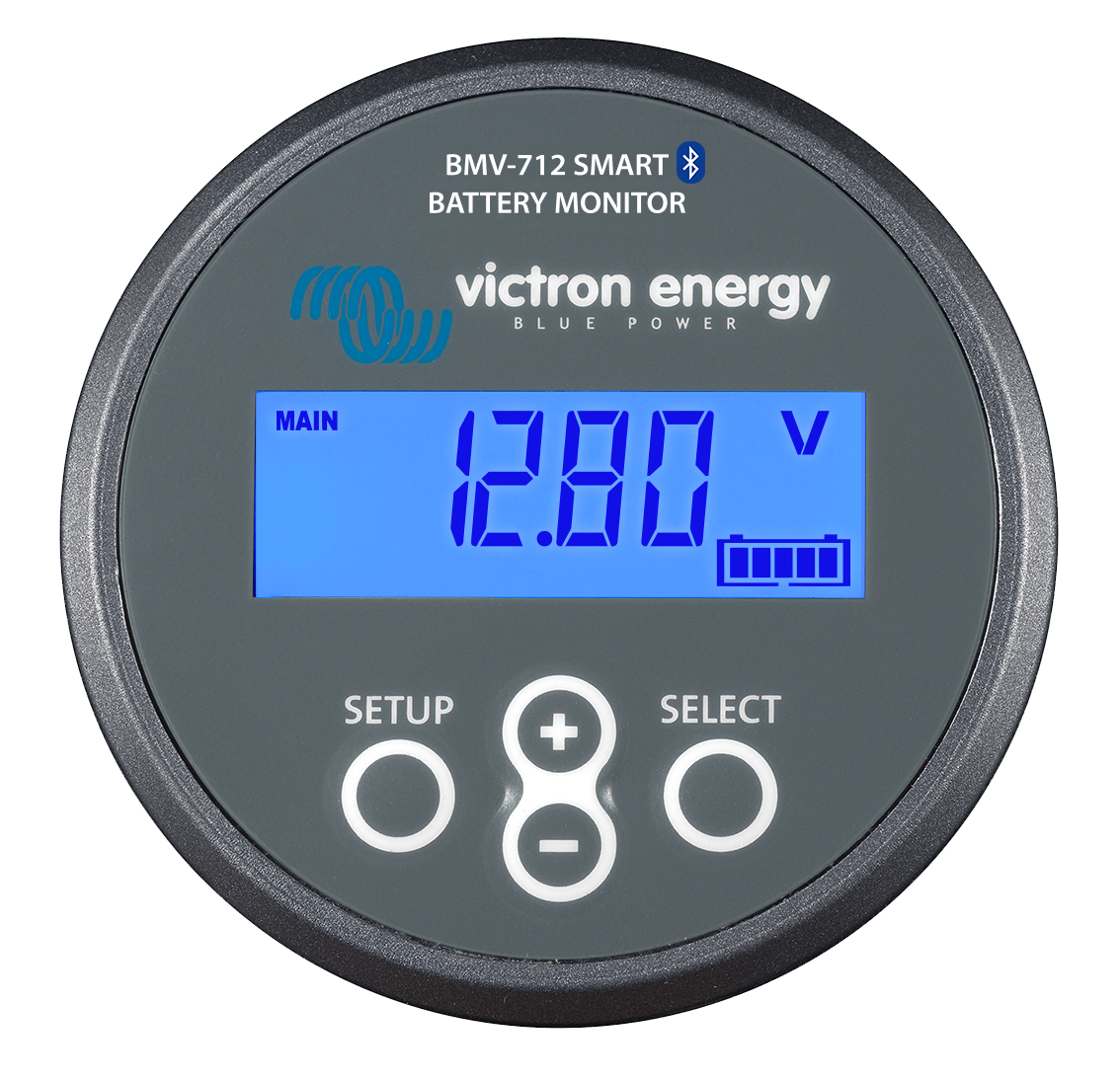
Pros
- Wall-mounted LCD display always on
- Programmable relay (generator start)
- Built-in alarm buzzer
- Temperature sensor input
Cons
- £45 more expensive
- More cables to route
- Display needs mounting location
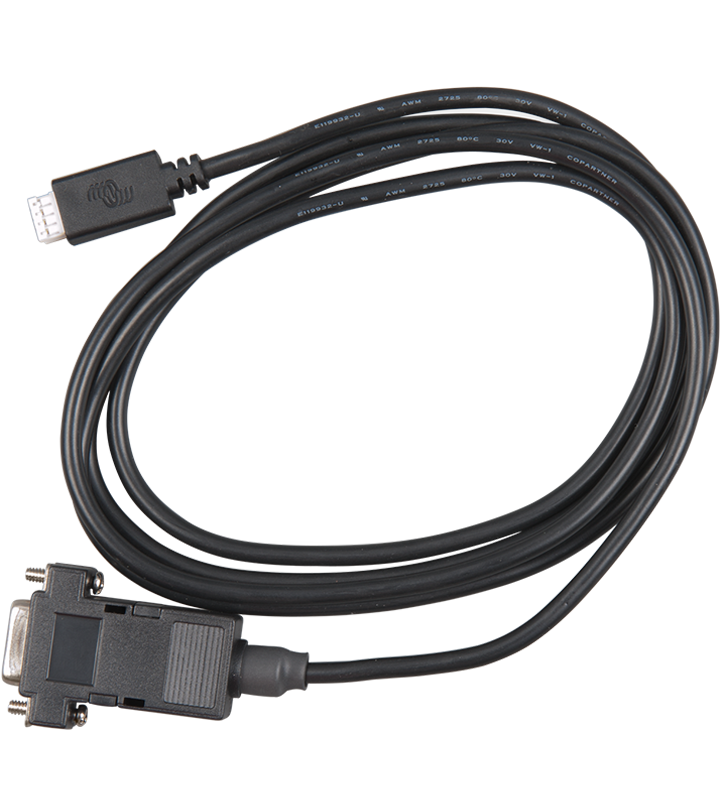
Pros
- £45 cheaper, same accuracy
- Smaller, simpler install
- Available in 1000A version
- Perfect with Cerbo GX
Cons
- No physical display
- No relay output
- Phone-only without Cerbo
Side by Side Comparison
| Feature | BMV-712 Smart | SmartShunt 500A |
|---|---|---|
| Display | Round LCD head unit (60mm dia.) | None (Bluetooth only) |
| Bluetooth | Built-in (VictronConnect) | Built-in (VictronConnect) |
| VE.Direct | Yes (to Cerbo GX) | Yes (to Cerbo GX) |
| Aux input | Temperature or midpoint voltage | Temperature or midpoint voltage |
| Programmable relay | Yes | No |
| Alarm buzzer | Yes | No |
| Shunt rating | 500A | 500A (also 1000A version) |
| IP rating | Display IP55, shunt IP21 | IP21 |
| Approx price | £130 | £85 (£110 for 1000A) |
Get the BMV-712 if...
- You want to glance at a display. Walk into your garage, look at the screen, see 78% SOC and 3 days remaining. No phone, no app, no waiting. It's mounted on the wall and always on.
- You need the relay. The BMV-712 has a programmable relay that can trigger a generator auto-start, a low-voltage disconnect, or an alarm. If you're building an off-grid system with a generator backup, this relay is worth the extra £45 on its own.
- You want the buzzer. The built-in alarm beeps when your battery hits a low-voltage threshold. Useful if you're living off-grid and don't check your phone constantly.
- You don't have a Cerbo GX. Without central monitoring, the BMV-712's display is your primary interface to the battery. The SmartShunt becomes phone-only, which gets old fast when you just want to check SOC while walking past.
Get the SmartShunt if...
- You have a Cerbo GX or Venus OS Pi. The SmartShunt reports everything to your central monitoring dashboard. You check SOC on the VRM portal or the Cerbo's touchscreen (if you have a GX Touch display). The phone app becomes your secondary screen, not your only screen.
- You're tight on space. The SmartShunt is just the shunt block - no separate display to mount, no extra cable to run. For a campervan or a tight electrical cupboard, it's cleaner and simpler.
- You're saving money for the rest of the system. It's £45 cheaper for identical measurement accuracy. Put that money toward a bigger battery or better cables.
- You need 1000A capacity. The SmartShunt comes in a 1000A version for ~£110. The BMV-712 is 500A only. If you're running a large 48V bank with a big MultiPlus, 500A might be marginal on surge currents.
What I Actually Use
I run a SmartShunt on the house battery bank, connected to a Cerbo GX. The SOC appears on VRM, on the MPPT's live view in VictronConnect, and on the Cerbo's dashboard. I've never wanted a dedicated display. If I'd built a system without a Cerbo GX, I'd get the BMV-712 for the wall screen. The extra £45 buys you a display you'll look at every day - hard to argue against that.
Bottom line: Cerbo? SmartShunt. No Cerbo? BMV-712. Don't overthink it.
Frequently Asked Questions
Is the BMV-712 worth £45 more than the SmartShunt?
Yes, if you want a physical display or need the programmable relay. If you have a Cerbo GX and are happy checking SOC on your phone or dashboard, save the money. The measurement accuracy is identical - you're paying for the screen and relay, not better measurements.
Do I need a battery monitor if I have a Victron MPPT?
The MPPT only knows what's going into the battery from solar. A shunt-based monitor measures total current in and out including loads and charging from the MultiPlus. For accurate state of charge, you need a shunt. The MPPT's voltage-based SOC guess is unreliable, especially with LiFePO4's flat discharge curve where voltage barely changes between 20% and 80% SOC.
Can I install it myself?
Yes, it's straightforward. Disconnect the battery negative, fit the shunt, reconnect everything to the other side of the shunt, run the small red power wire to positive, and configure in the app. About 15 minutes. No electrician needed for 12V/24V systems. For 48V home systems, it's still simple but the DC currents are higher - use properly rated cable and torque the connections.
500A or 1000A SmartShunt?
500A covers any single MultiPlus II setup (the 5000VA pulls ~100A from a 48V battery at full load, well within 500A). The 1000A version exists for very large banks with multiple inverters or when you're paralleling two 5000VAs. For a standard UK home system with one MultiPlus, 500A is plenty. The extra £25 for 1000A is cheap insurance if you're unsure.